Sports based social and performance platform built to showcase players, clubs and teams
AthFolio is a sports-focused platform designed to give players and clubs a richer digital presence, combining profiles, performance data, social interaction, and team structures into a single system. The platform is currently midway through development, with core foundations in place and active delivery ongoing.
Built initially for field hockey, AthFolio has been designed from the outset as a scalable, sport-agnostic platform, capable of supporting additional sports, leagues, and competition formats over time.
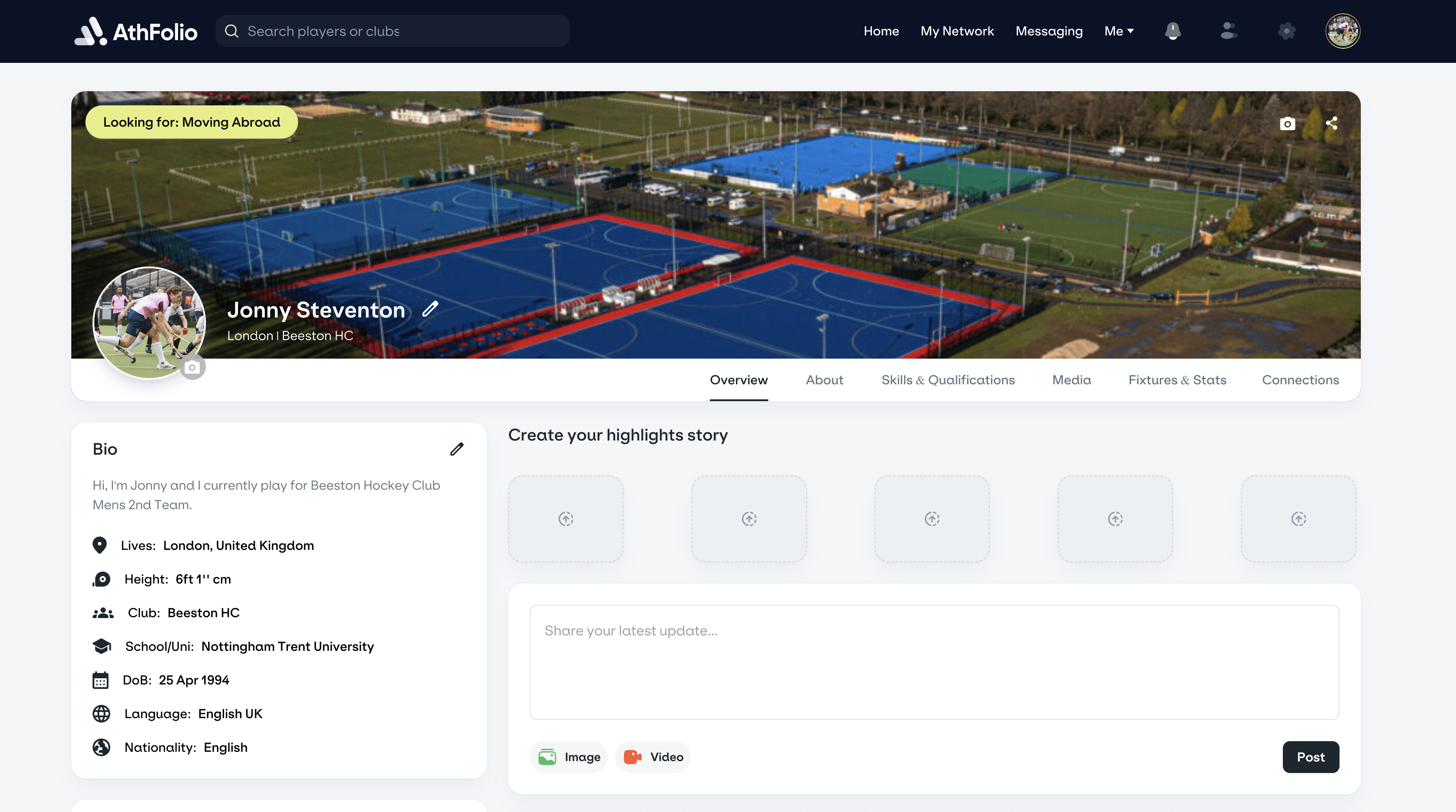
AthFolio
Project Type
Software
Industry
Sports / Social
End-to-End Product Design & Build
Technical Architect
UX Designer
Product Manager
Requirements Planning
PRD Generation
Wire-framing & Userflows
Branding
UX Designs
Technical Documentation
The Problem
Sports communities are highly fragmented digitally. Players track stats in one place, manage teams in another, share achievements on social platforms, and rely on informal tools to showcase performance or connect with clubs.
Key problems identified included:
No single source of truth for player identity and performance
Limited visibility beyond local teams or leagues
Inconsistent data across teams, seasons, and competitions
Clubs lacking meaningful digital profiles and engagement tools
Existing platforms prioritising content over structure
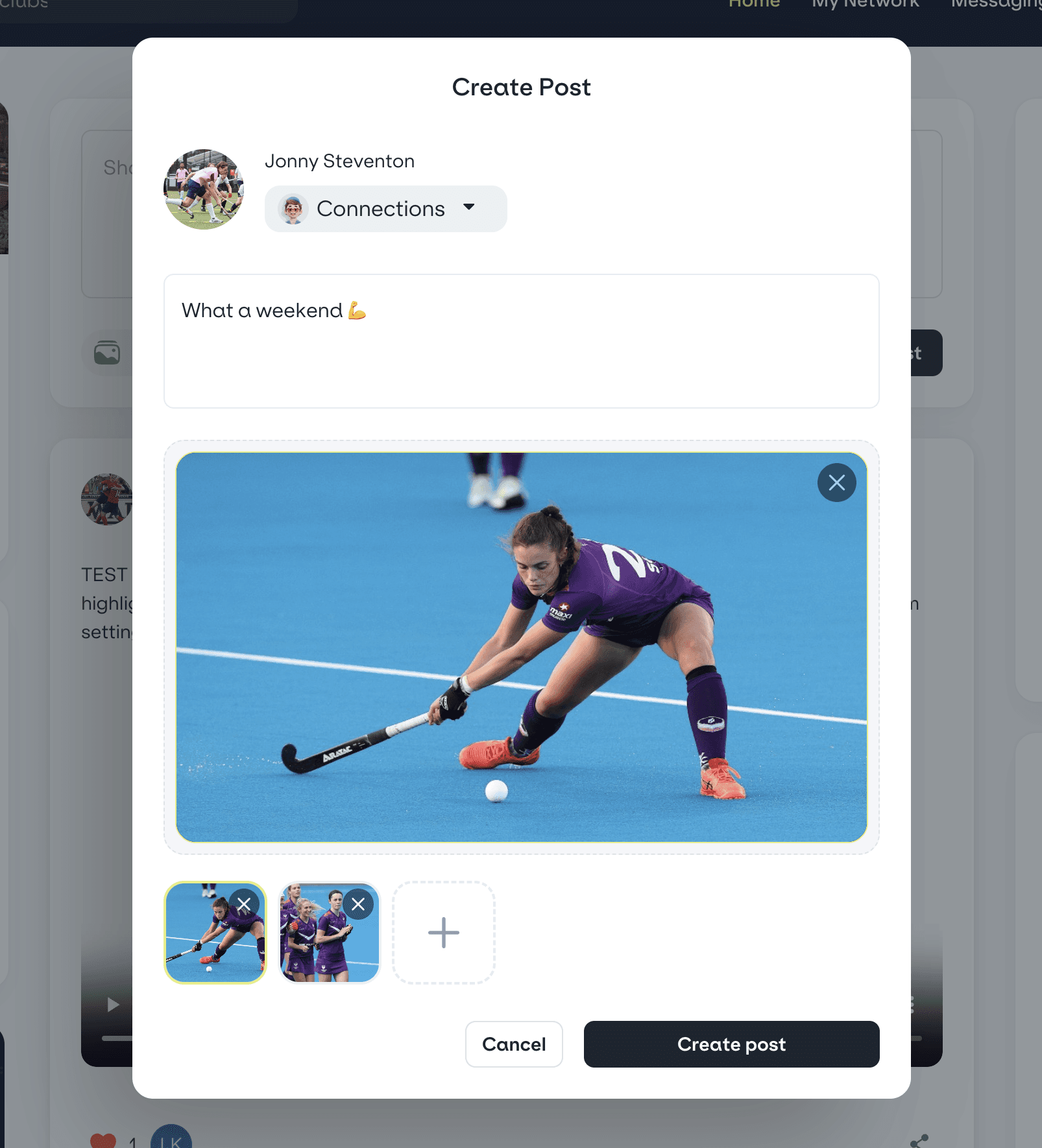
Players and coaches use socials platforms to showcase their achievements and to connect.
The opportunity was to build a proper sports platform, one that treats players, clubs, teams, and performance data as first-class entities.
The Solution
The solution is a modular platform built around structured sports data, social interaction, and long-term progression. AthFolio is designed to unify identity, performance, and community into a single experience, giving players ownership of their profile and clubs a clearer way to engage, recruit, and showcase activity.
At its core, the platform is built on:
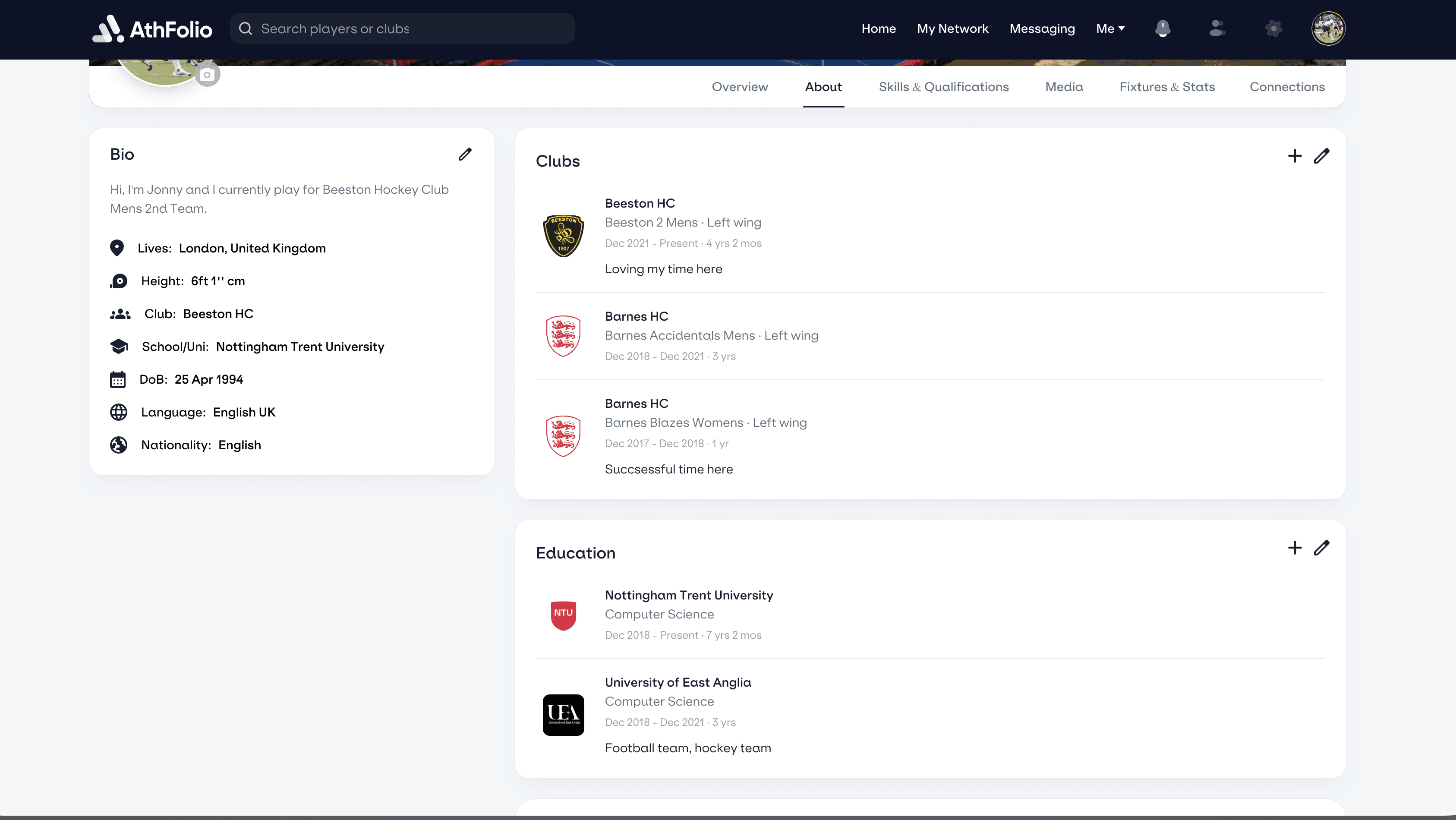
Persistent player profiles
Club and team structures
Match, season, and performance data
Social interaction layered on top of structured data
This approach allows the platform to support meaningful insight and progression, rather than just surface-level content.
My Role
I am working as Product Lead and Product Owner, responsible for guiding AthFolio from early concept through to live delivery.
My role spans:
Product vision and long-term platform strategy
Defining system architecture and core entities
Writing detailed PRDs and functional specifications
Designing UX flows and interfaces
Managing roadmap and delivery phases
Acting as the primary bridge between stakeholders and developers
This is an ongoing, hands-on role focused on clarity, structure, and sustainable delivery.
Current State
AthFolio is currently midway through development, with:
Core data models and architecture in place
Key UX flows designed and implemented
Active development across multiple feature areas
A clear, phased roadmap for continued delivery
The platform is being built iteratively, allowing learning and refinement without compromising foundations. I've been working closely with the founders from AthFolio to line up a set of early adopters. With the main aim of extracting feedback from these users so the fixes can be added into the roadmap.
AthFolio have big plans to market the platform within the UK, Europe and also the US going into future versions of the product.
Process
Product Design & Architecture: AthFolio is being built as a multi-entity platform, with clear relationships between users, players, clubs, teams, leagues, and competitions.
Ket architectural principles include:
A clear separation between identity, performance, and social layers
Role-based permissions across players, coaches, admins, and clubs
Reusable data structures that work across sports formats
Scalable foundations that support future features without rework
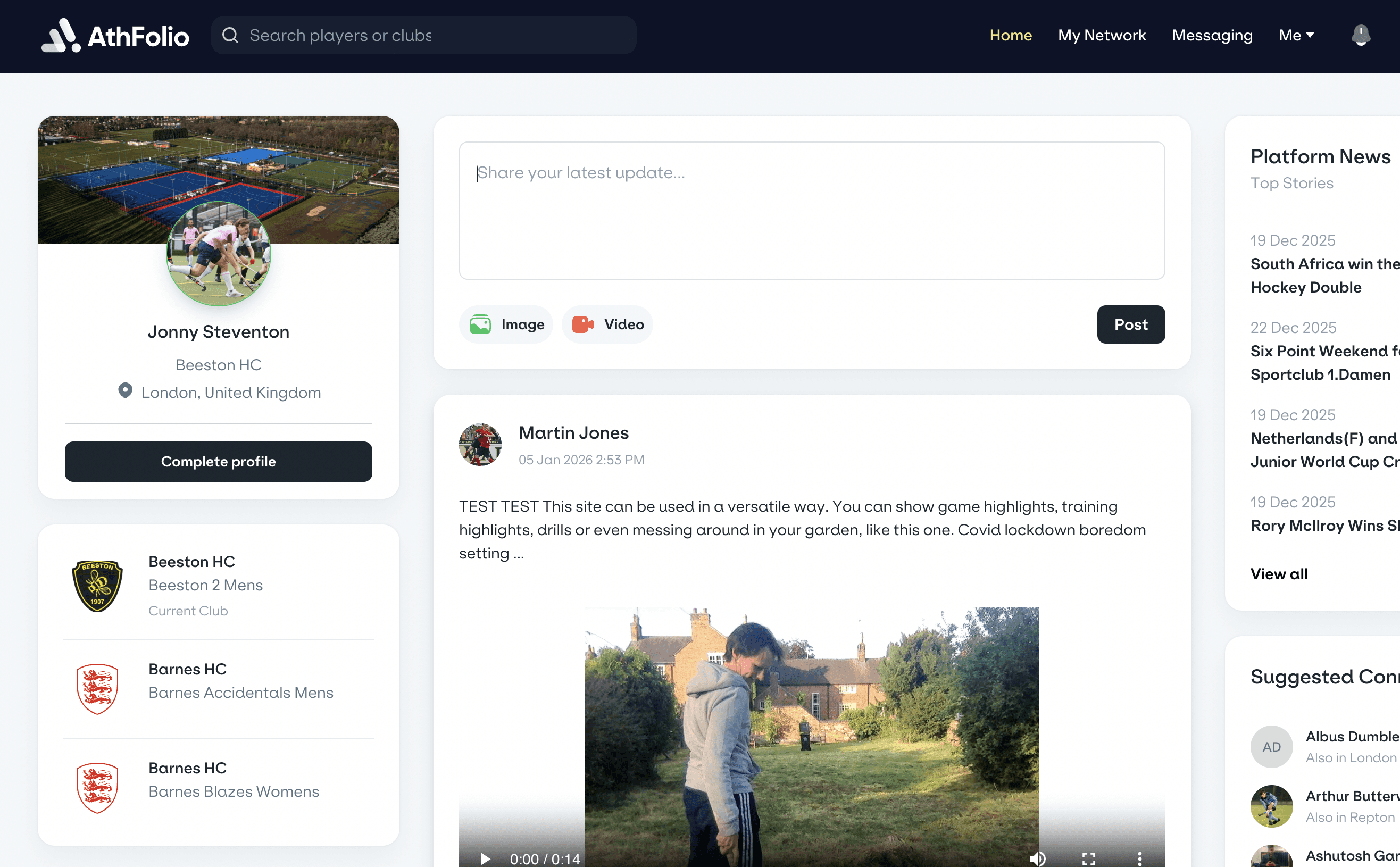
UX design mirrors this structure, ensuring complex relationships feel intuitive rather than overwhelming.
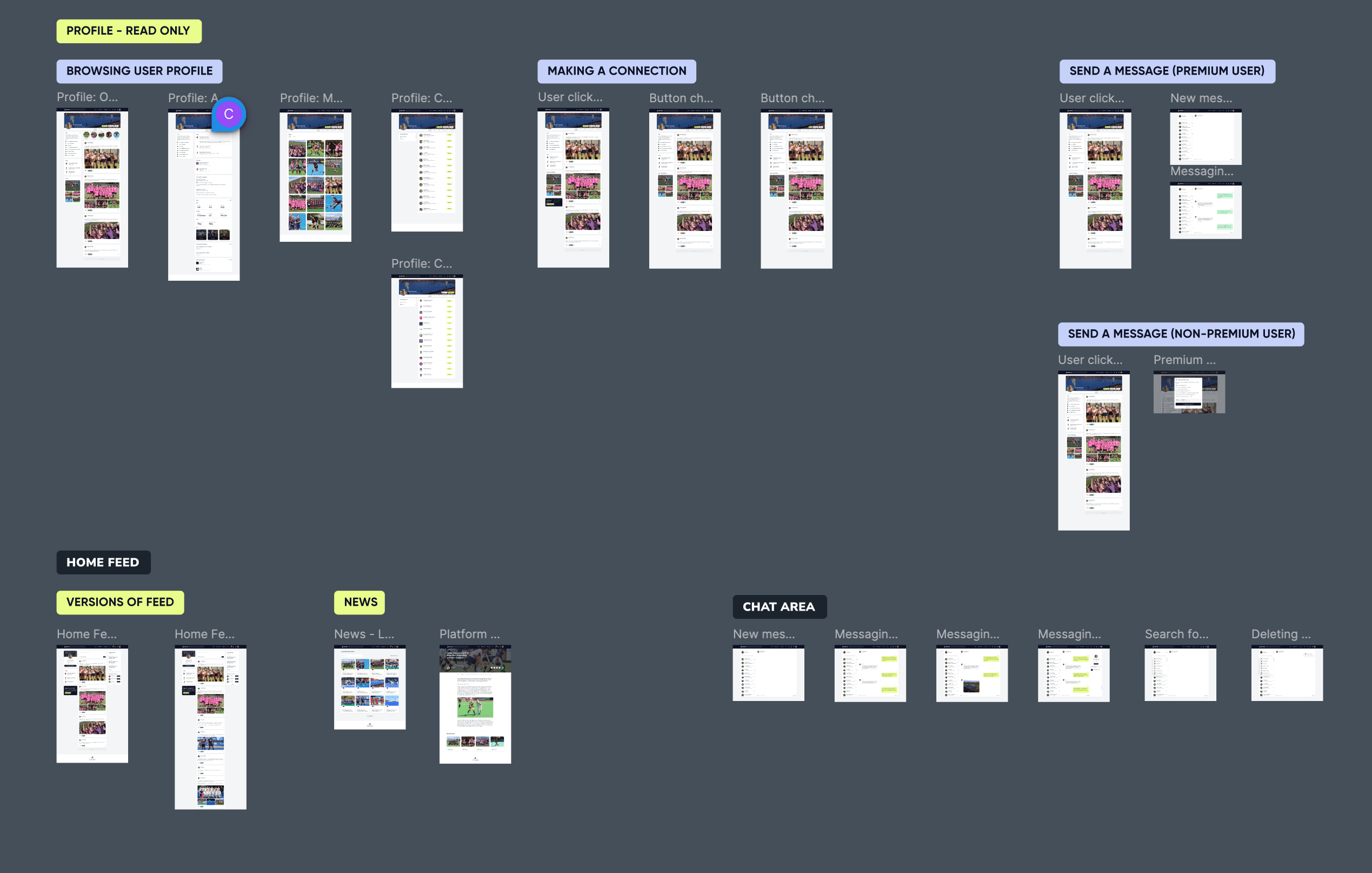
UX & User Flows: UX design focuses on clarity and progression, helping users understand where they sit within teams, clubs, and competitions.
Key flows include:
Player onboarding and profile creation
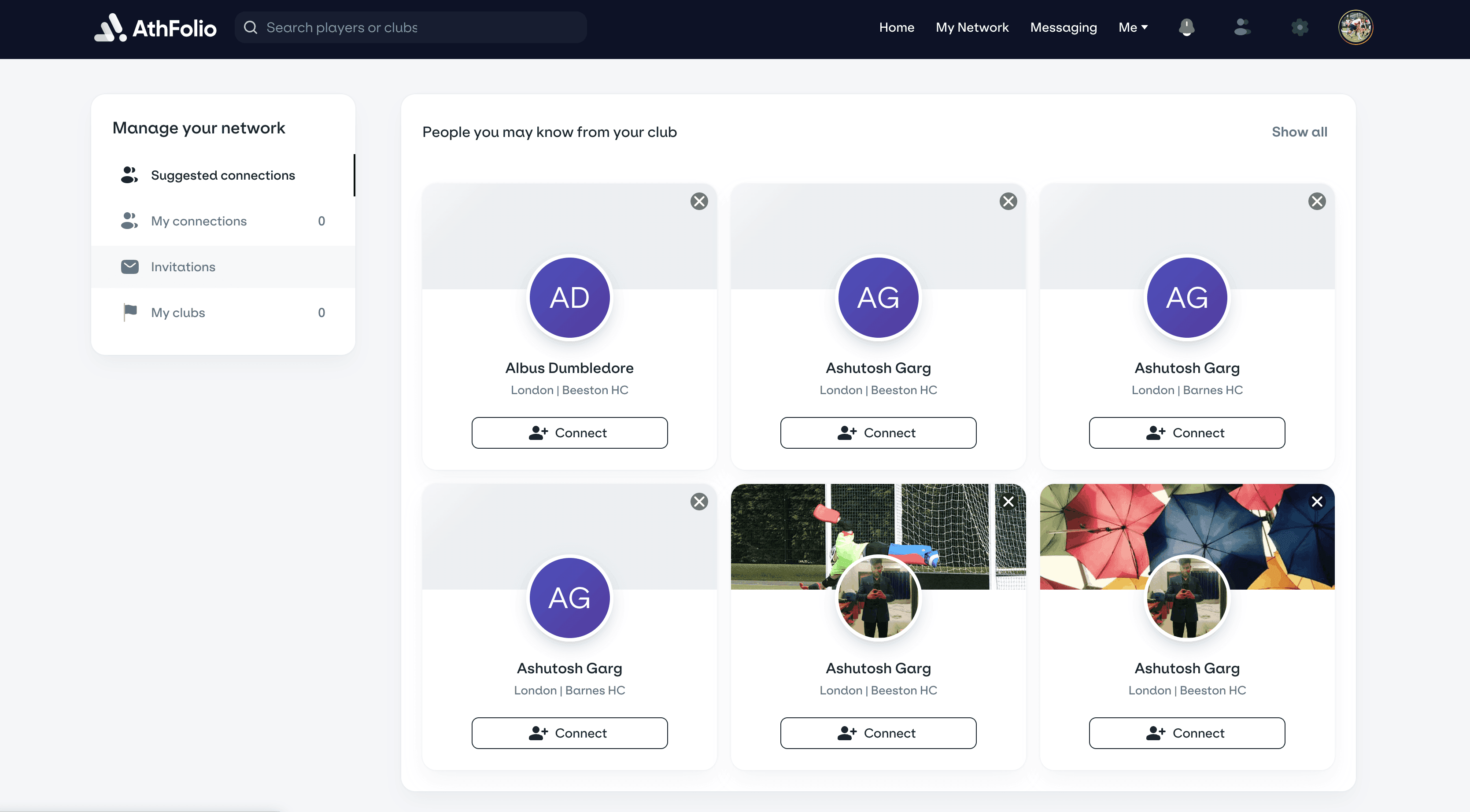
Club and team discovery
Match and stat visibility
Social interaction around structured data
Navigation between personal, team, and club views
Design decisions prioritise context, ensuring users always understand who they are, where they are, and why something matters.
Core Platform Features: The Rame platform was built around several key functional areas:
Client and project management
Project hubs with overview panels
Task and workflow management
Centralised file storage
Real-time internal messaging
Project location mapping
Settings and permissions
Each area was designed to work together as past of a single system, rather than as isolated featured. Allowing project team and key stakeholders to navigate between projects efficiently.
Conclusion
AthFolio is a strong example of product leadership in motion. It shows how I approach vision, structure, and delivery when building a complex platform over time, grounding decisions in clarity, scalability, and real user needs.
One of the most rewarding area of the project is seeing it come to life, initially the founders of AthFolio came to me with an idea scribbled down on a piece of paper. It's now well into it's development phase and things are starting to take shape nicely.