RoleDrop - AI Driven Job Platform helping graduates discover, track and manage early-career opportunities.
Role Drop is a web-based platform designed to help students and early-career graduates discover graduate schemes and internships in a clearer, more structured way. The product focuses on personalised job discovery and application tracking, solving a problem the client has seen repeatedly throughout graduate space.
The first version of Role Drop has now been fully designed and delivered, laying strong foundations for future growth and iteration.
SaaS Platform
Product Owner
Technical Architect
UX Designer
Project Manager
Product Strategy
UX & User Flows
Technical Planning
Delivery Oversight
End-to-End Product Build
6 months
Product Lead + Dev Team
Challenge
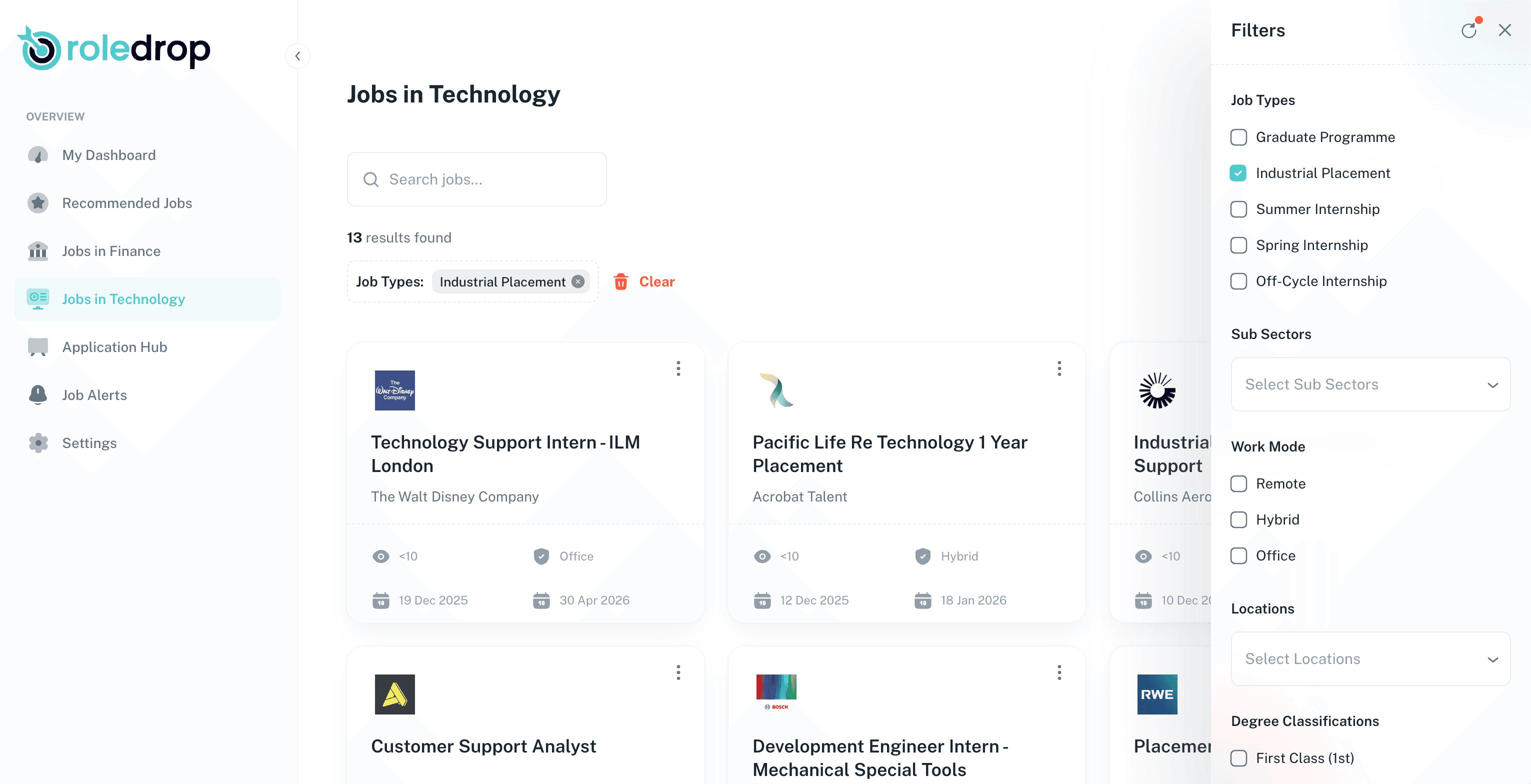
Graduates face an overwhelming and fragmented job search process. Opportunities are spread across multiple job boards, company sites, and niche platforms. Often with inconsistent information, unclear deadlines, and no easy way to track progress.
From early research, a few clear issues emerged: Job discovery felt generic rather than personalised. Application tracking was manual, messy, or non-existent. Graduates struggled to compare opportunities and stay organised. Existing platforms prioritised listings over user experience. And one clear challenge that we faced was speed, other platforms were competing to supply candidates with roles quickly. RoleDrop wanted to pull roles from multiple platforms and send them to their candidates instantly.
The challenge was to design a product that reduced noise, added structure, and genuinely helped users manage their early career journey.
My Role
I acted as Product Owner and Technical Lead, responsible for the project end-to-end. My involvement included:
Product discovery and concept definition
Requirement gathering and MVP scoping
UX and user flow Design
Feature prioritisation and roadmap planning
Technical architecture planning
Sprint planning and management
Testing and feedback iterations
Project managing developers throughout delivery
Version 2 scoping
Results
The first version of RoleDrop was successfully delivered, providing:
A complete end-to-end user journey
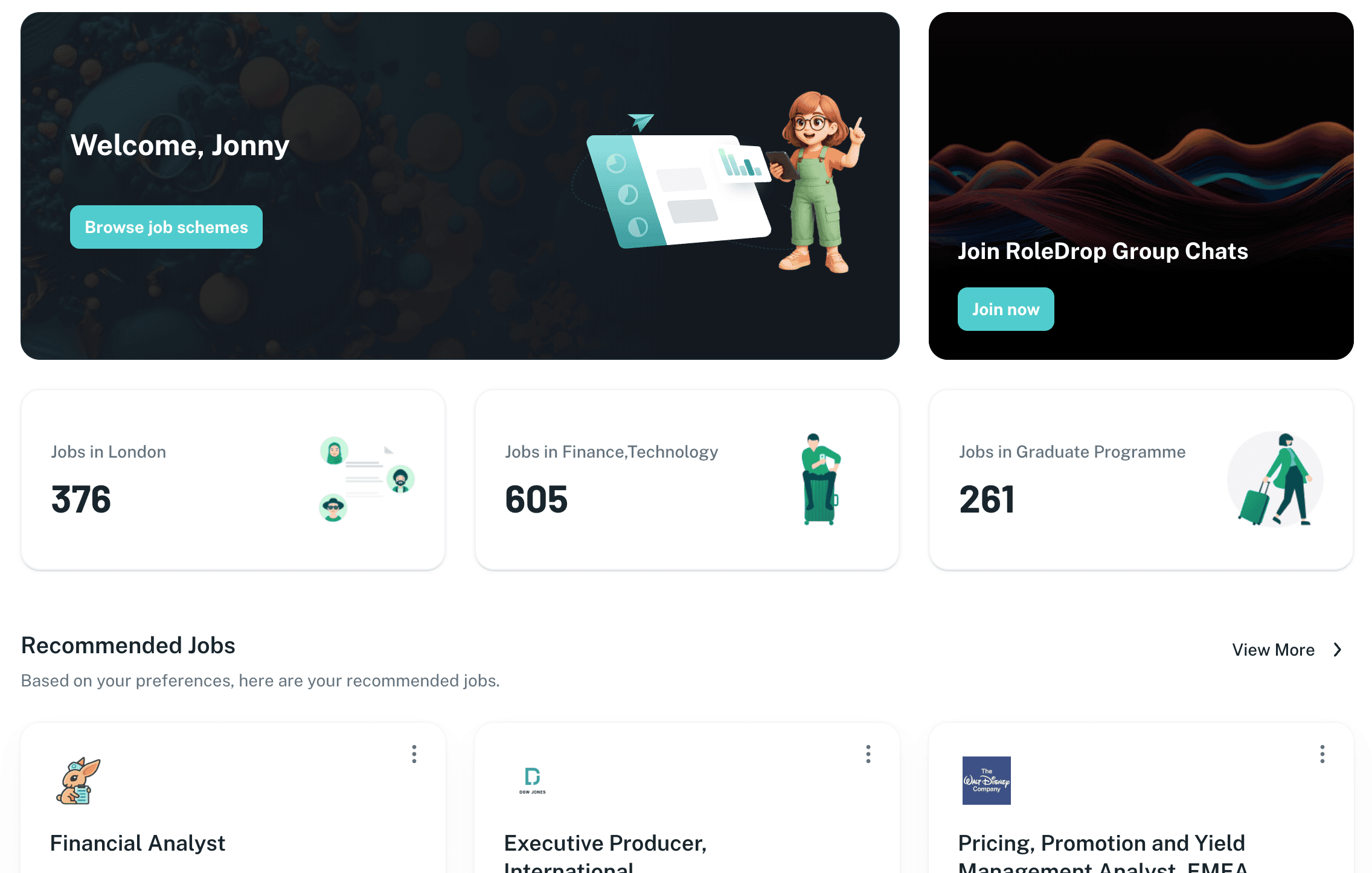
Personalised job discovery
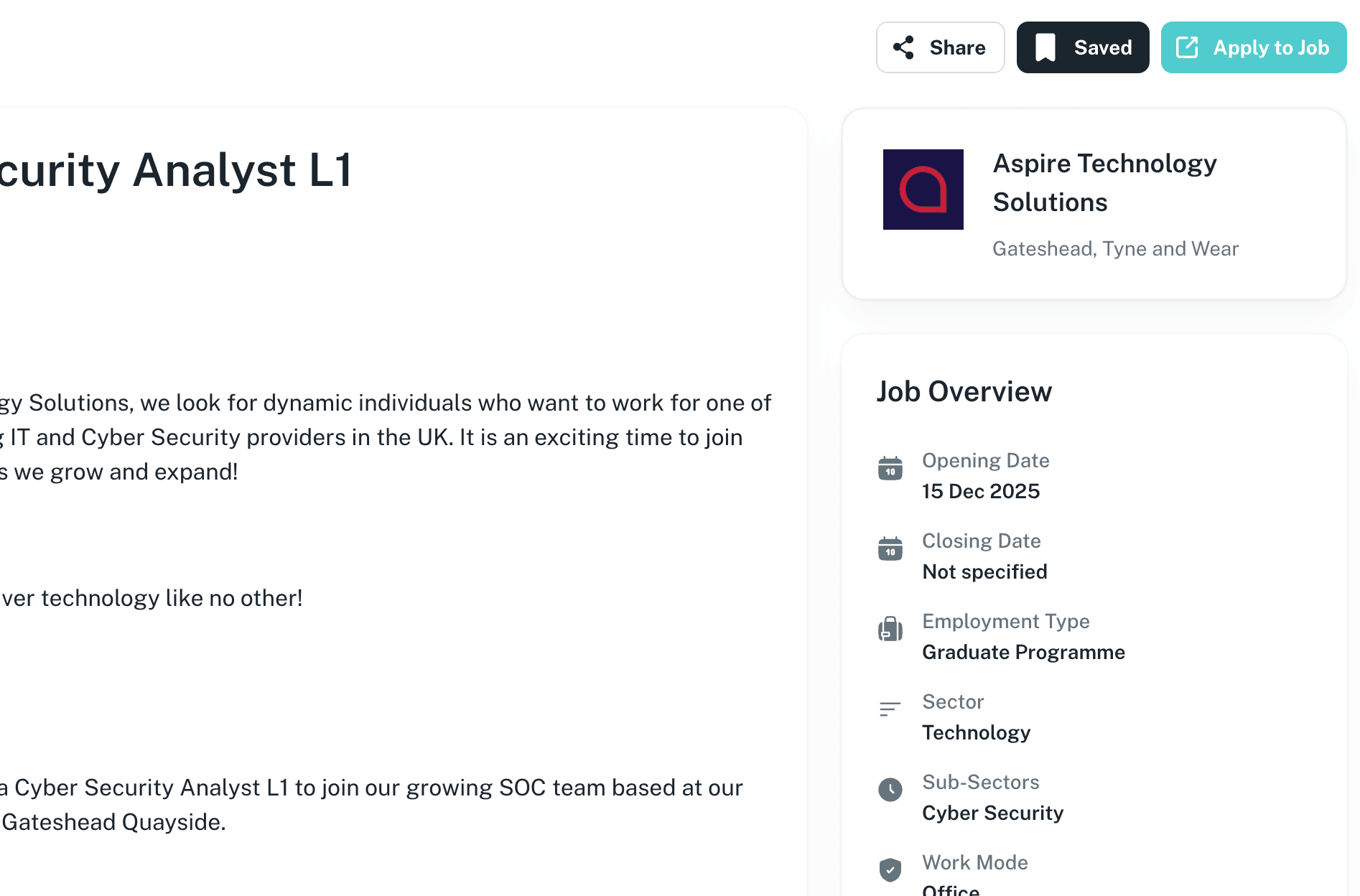
In-depth AI job scraping architecture, allowing the platform to retrieve roles from multiple platforms, bringing them into RoleDrop and pushing them to users based on their personal preferences.
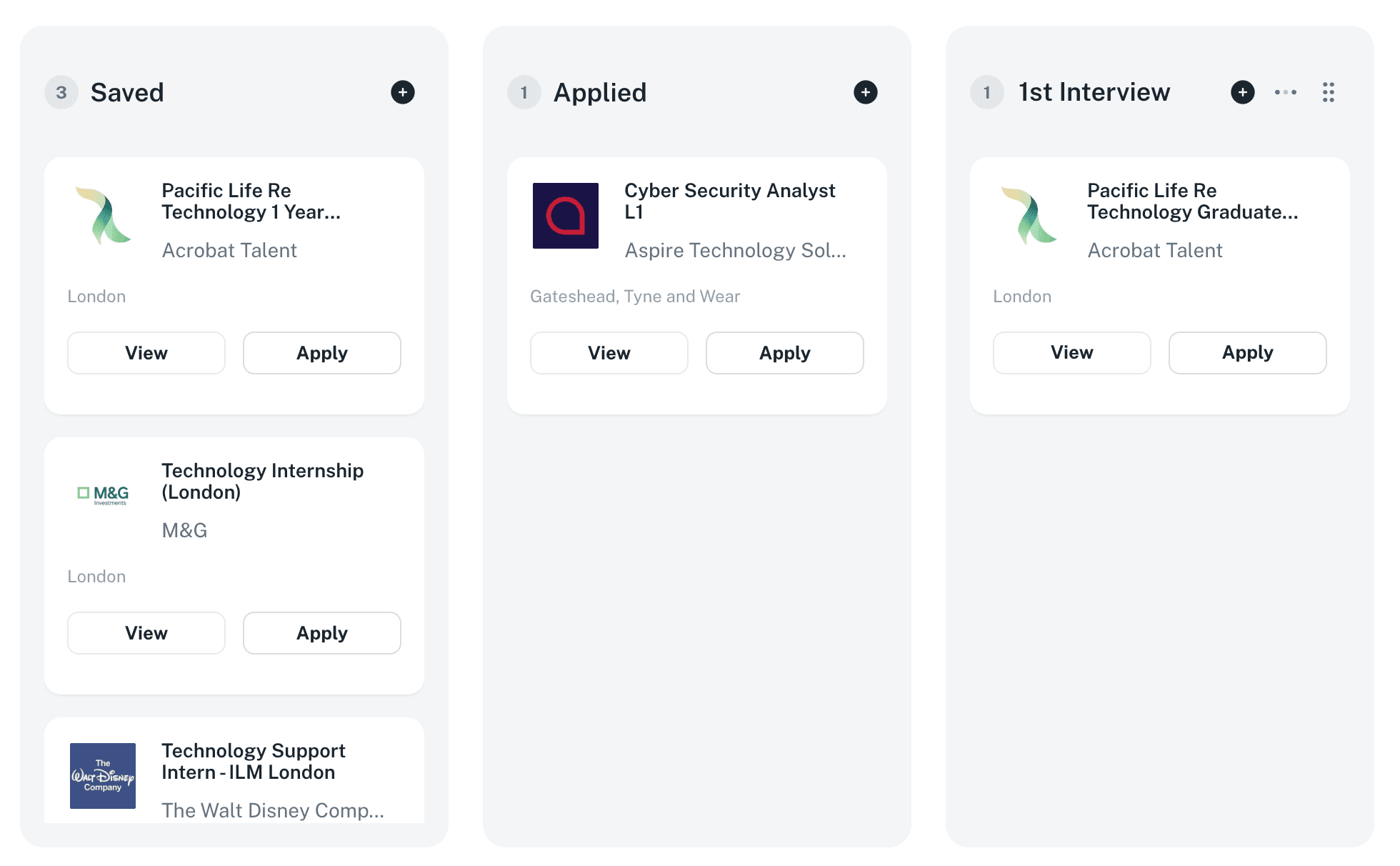
A functional application tracking system
A scalable foundation for future features
The product is now well-polished for further development, including smarter recommendations, richer analytics and expanded opportunity coverage. Version 2 requirements scoping is currently undergoing.
Process
Discovery & Planning: I began by defining the core user problem and mapping the graduate journey, from discovering opportunities to tracking applications over time. This informed the initial MVP scope and helped keep the product focused on real user needs rather than feature bloat. Key activities included:
Defining target personas
Mapping end-to-end user journeys
Prioritising features for a realistic MVP
Writing structure product requirements
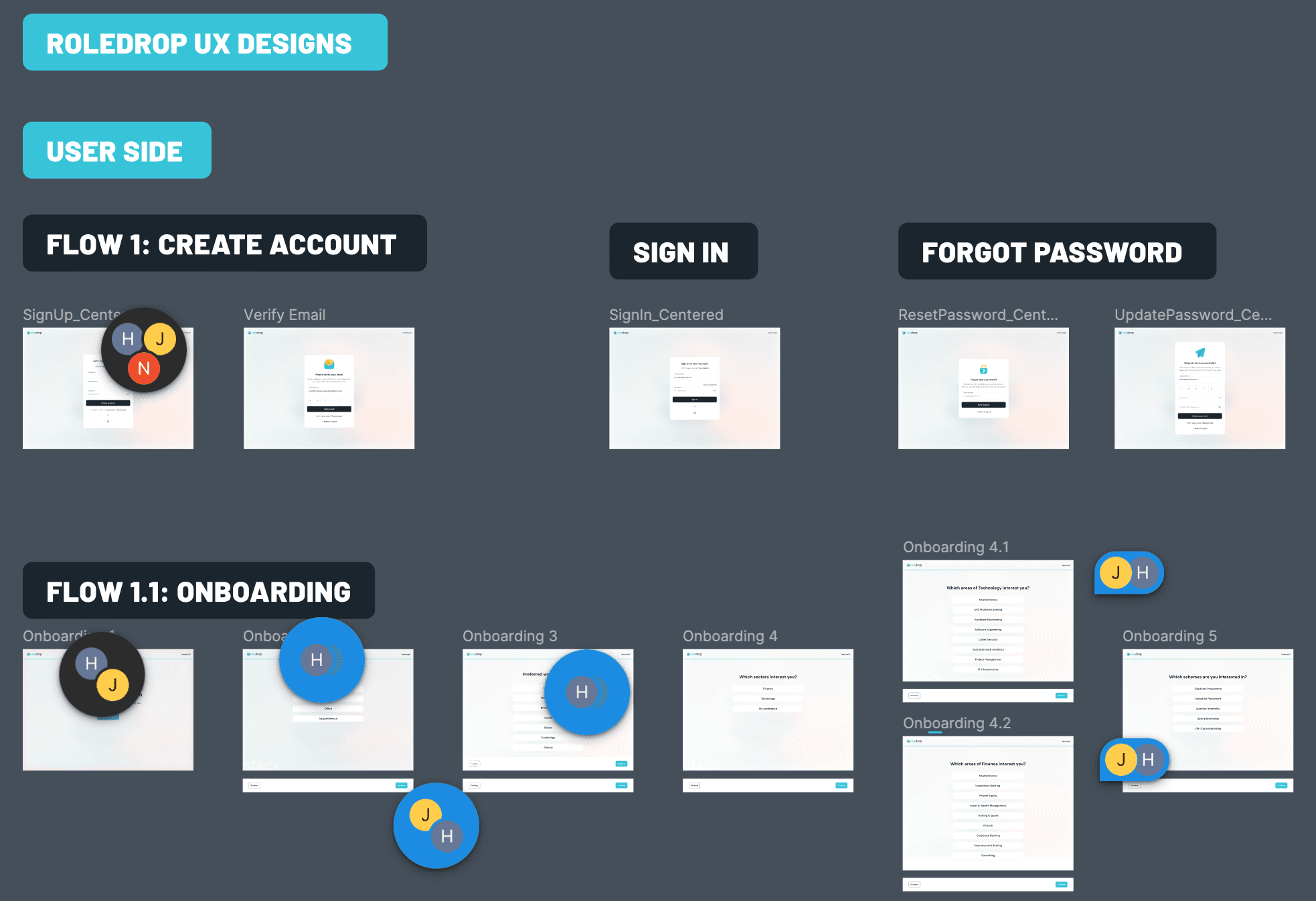
Wire-framing & UX Designs: My UX designs focused heavily on clarity and simplicity. The goal was to make the platform feel calm and supportive, not overwhelming and clunky. Key UX considerations:
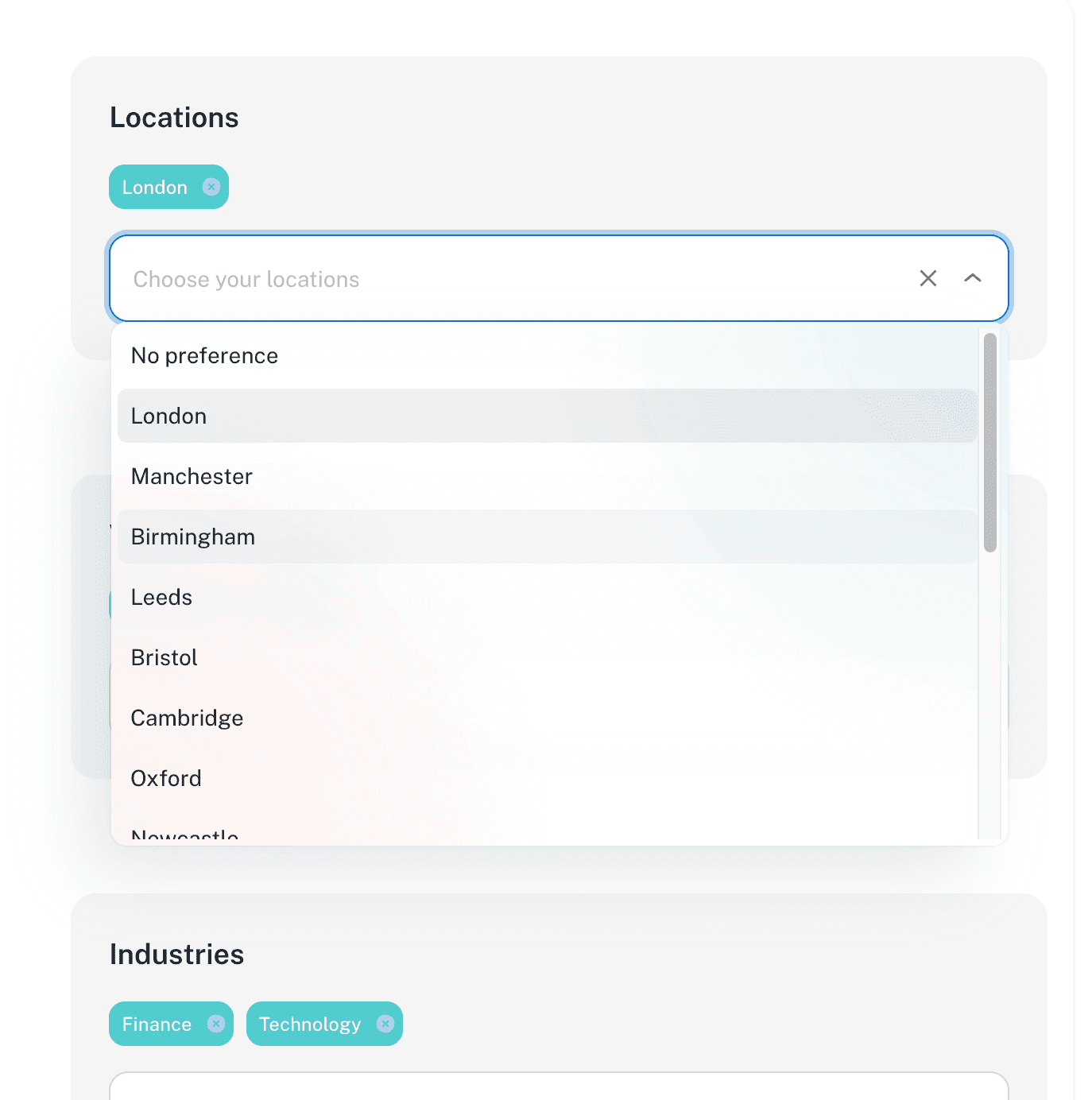
A personalised onboarding flow to understand user preferences
A clean job discovery experience with filtering and ranking
An application tracking dashboard that felt intuitive and lightweight
Clear information hierarchy to reduce cognitive load
Wireframes and flows were designed to be easily extensible as new features were to be introduced in future versions.
Technical Architecture & Delivery: From a technical perspective, the product was designed with scalability in mind. So it was imperative to choose to correct architecture. Decisions included:
Structuring job data in a normalised, flexible format.
Designing the system to support multiple data sources (scraping + APIs)
Planning and accommodating AI-driven recommendation logic
Ensuring the architecture could evolve without major rewrites
I worked closely with the development team throughout implementation, ensuring product intent and UX decisions were preserved during the build.
Moving forward: Upon delivery of version 1 of the platform, I worked closely with the founders on their roll out strategy. Myself and the development team integrated the platform with Mixpanel, allowing us to understand user activity and analytics. Based off these findings, this moulded the prioritisation for requirements that have been planned into the version 2 scope of the project.
Conclusion
It was fantastic to play a pivotal role within the first version build of RoleDrop. From working with the founders from day one, it was great to work alongside them throughout the planning, designs and delivery phases. I approached the build by researching real user problems, planned and designed the platform with clarity and intent while balancing ambition with practical delivery.
The key area of the platform was the technical architecture behind the AI-driven job discovery and smart recommendations. After careful planning and overseeing the delivery from developers, this has placed the platform in a perfect position within the ever-changing job platform market which going forward will be in the hands of further AI capabilities.
I'm very much looking forward to working alongside the founders going into future versions.